Emergency water extraction
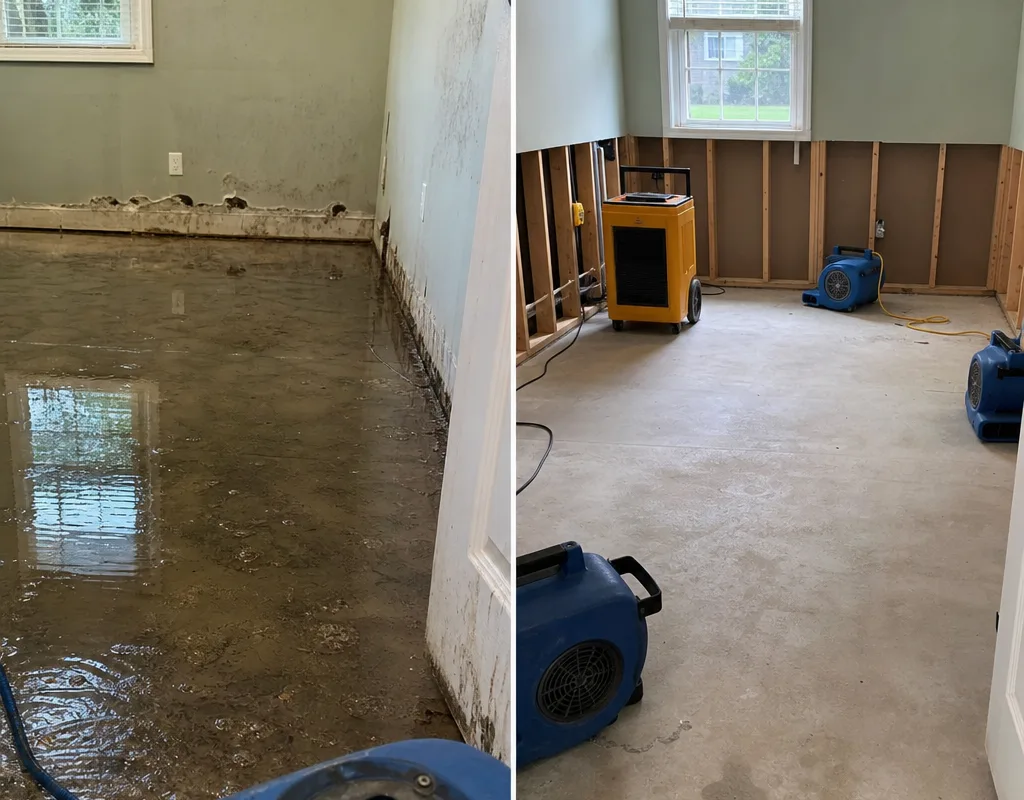
Rapid removal of standing water using professional pumps and extractors, followed by surface cleaning to reduce slip hazards and contamination spread.
Serving Charlotte, North Carolina & surrounding areas
24/7 Emergency Response
Water damage restoration in Charlotte, North Carolina
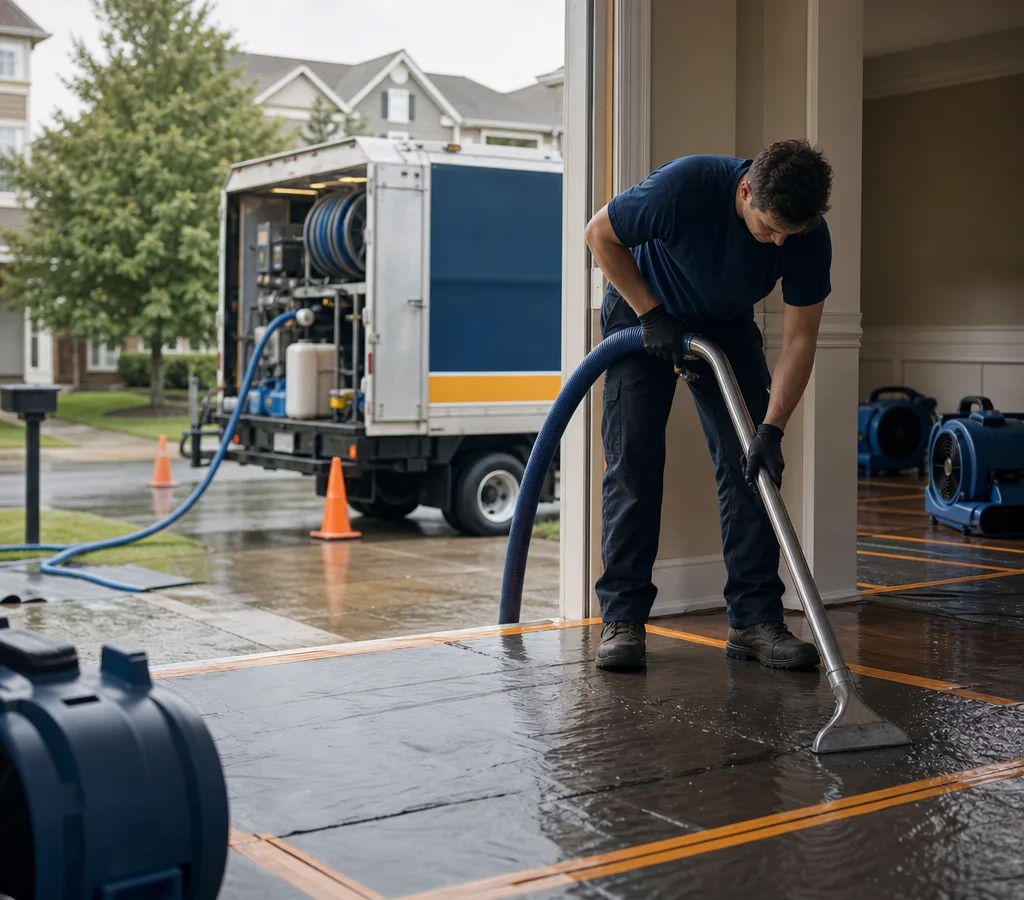
Fast water removal, drying, and rebuild coordination to limit damage, protect materials, and get your home back to normal with clear updates from start to finish.
Fast action, measured drying
When a supply line bursts, an HVAC drain backs up, or a water heater lets go, damage keeps growing until moisture is removed and materials are dried. For water damage restoration Charlotte NC homeowners can trust, the first goal is simple: get standing water out, get airflow and dehumidification running, and document conditions so the right repairs follow. Water left in a building is what lets mold start, which is why restoration and mold removal in Charlotte are handled together.
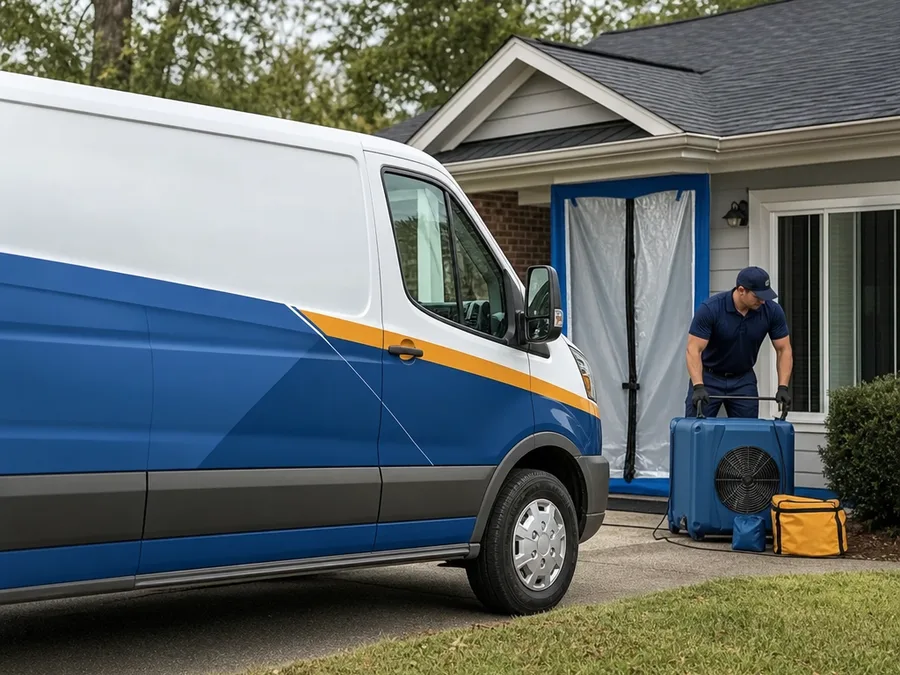
Our team at Charlotte Mold Removal handles the full water restoration workflow for homes and small commercial spaces in Charlotte. That includes emergency water extraction, structural drying, controlled demolition when needed—like removing soaked baseboards or drywall—and helping coordinate rebuild steps so the space is safe and usable again.
Charlotte's humid conditions can slow drying and push moisture deeper into framing, subfloors, and insulation. That is why we rely on moisture mapping, targeted drying setups, and daily monitoring rather than guessing when an area is dry.
If your water issue has also created a musty odor or you suspect microbial growth, our mold removal services can address inspection and remediation when moisture problems overlap.
Complete restoration support
Rapid removal of standing water using professional pumps and extractors, followed by surface cleaning to reduce slip hazards and contamination spread.
Air movers and dehumidifiers are placed based on moisture readings so walls, floors, and cavities dry evenly, not just the visible surfaces.
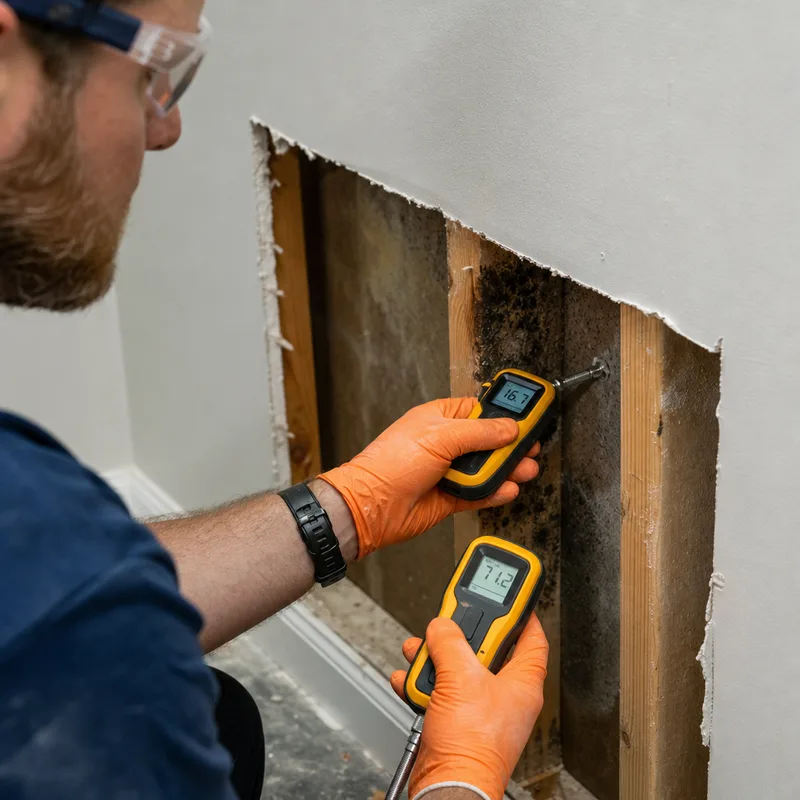
We track moisture content and humidity so drying decisions are based on measurements. You get clear updates on progress and next steps.
When materials cannot be salvaged, we remove only what is necessary—for example, affected drywall cuts—to expose wet areas and speed drying.
Cleaning steps depend on the water source. Sewage and other contaminated losses require a different protocol than clean supply-line water.
After the site is dry, we help outline needed flooring, drywall, trim, and paint repairs so you can make informed decisions.
Measured from extraction to dry standard
A good Charlotte water damage restoration job is built on controlling moisture, not just removing water you can see.
We start by identifying the water source and stopping it—or helping you locate the shutoff if needed. Then we classify the loss based on the cleanliness of the water. Clean water from a supply line is handled differently than gray water from an overflow, and contaminated water requires stricter containment and disposal practices.
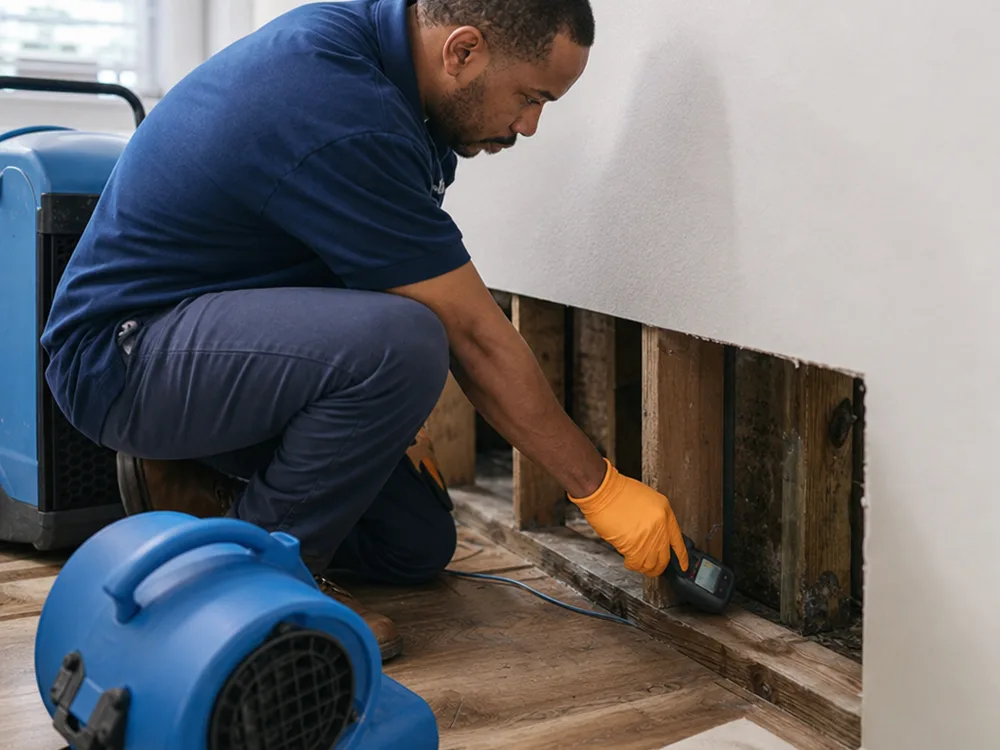
Next comes moisture mapping. We check likely travel paths: along baseboards, under floating floors, into adjacent rooms, and down into subfloors. In many homes, water reaches behind cabinets or under toe-kicks where it stays hidden.
Drying is set up to match the structure. A typical setup uses air movers to create airflow across wet surfaces and dehumidifiers to pull moisture out of the air so evaporation can continue. We adjust equipment placement as readings improve.
You will hear the term dry standard. In practice, that means materials are dried back to a reasonable, stable level for the structure and conditions. We document readings so the handoff to repairs is clean and defensible.
Source control through repair planning
We look for electrical hazards, slipping risks, and contaminated water. The priority is stopping the leak or intrusion so cleanup work actually holds.
We remove standing water, extract from carpets when salvageable, and begin surface cleaning. Faster extraction usually reduces how much material has to be removed later.
We measure moisture in walls, floors, and nearby rooms, then choose equipment and placement based on readings rather than square footage alone.
We run and adjust air movers and dehumidifiers, track temperature and humidity, and re-check moisture levels until affected materials reach a stable dry condition.
If drywall, insulation, trim, or flooring cannot be saved, we remove what is necessary to access wet cavities and prevent trapped moisture, then outline the repair steps.
Pricing factors
Water damage restoration in Charlotte typically ranges from about $1,200 to $6,000+, with small, clean-water incidents on the lower end and larger losses with material removal, drying in multiple rooms, or contaminated water on the higher end. A straightforward extraction and drying setup may run $1,200 to $2,500, while projects needing demolition, sanitizing, and rebuild coordination often land $3,000 to $10,000+.
Final cost depends on how far water traveled, what materials are affected—such as drywall, insulation, hardwood, and subfloor—access to wet cavities, equipment runtime, and whether the water is clean or contaminated. Exact pricing is confirmed after an on-site inspection and moisture mapping.
Answers before restoration begins
You should start water restoration the same day you discover the leak, because moisture moves into drywall, trim, and subfloors quickly and drying time increases the longer materials stay wet. In Charlotte's humid climate, indoor humidity can stay high even after standing water is removed, so professional dehumidification and monitoring helps prevent hidden moisture from lingering behind walls and under flooring.
We handle both extraction and structural drying, because removing standing water is only the first step. A complete water restoration Charlotte setup includes airflow, dehumidification, and moisture checks so wall cavities, framing edges, and subfloor layers are addressed, not just the visible wet spots.
Common sources include supply line failures such as washing machine hoses and sink lines, water heater leaks, toilet overflows, and HVAC condensate drain backups. Each source changes the cleanup approach, because clean water and contaminated water require different handling, cleaning steps, and disposal practices.
Sometimes, but many wet insulation and drywall areas need selective removal to dry the structure properly. Drywall can wick water upward, and insulation can hold moisture against studs, which slows drying and can create odor problems. We confirm what is salvageable using moisture readings and visual inspection, then remove only the materials that cannot be dried back to an acceptable condition.
Most drying phases take about 3 to 5 days, but timelines vary based on how long the water sat, what materials are affected, and how many rooms are involved. Hardwood floors, dense subfloors, and wet wall cavities can extend drying time, and we base completion on moisture measurements rather than the calendar.
Shut off the water source if it is safe, avoid areas with standing water near outlets, and move small items off wet floors to reduce staining and swelling. If you can do so safely, blot or extract surface water with towels or a wet/dry vacuum and set the AC to a stable temperature, but avoid opening walls or pulling up flooring without a plan because it can spread contamination or create extra repair work.
Yes, we can provide documentation that insurers commonly request, including photos, moisture readings, equipment notes, and a clear scope of what was affected. Coverage depends on your policy and the cause of loss, so we focus on documenting conditions and explaining the restoration steps in plain terms so the claim process is easier to follow.
If your property in Charlotte has water intrusion, the next step is an on-site inspection and moisture mapping so drying and repairs are based on real readings. Share what happened and when it started, and we will outline the safest path to dry, clean, and restore the affected areas.